
At The Mediterranean aha Forum, in Partnership with VisitMalta Incentives & Meetings last month, attention turned from compliance to people, as well as the implications of increased accessibility in economic terms.
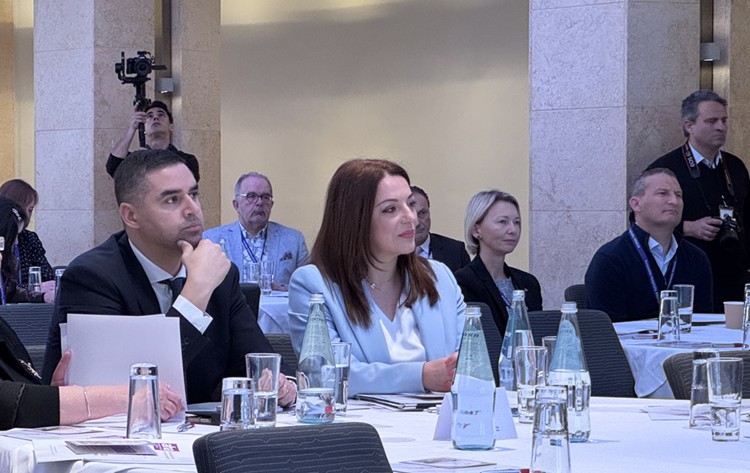
Julia Farrugia, Malta’s Minister for Inclusion and the Voluntary Sector, brought focus to the lived reality of accessibility within workplaces and across society.
Minister Farrugia spoke with passion, recognising accessibility as a basic human right, and an economic imperative.

Former President of Malta Marie Louise Coleiro Preca underlined the need to see people’s ability, speaking candidly the former president said:
“I’m afraid I am quite direct on this, and this is the experience I get from many young people with disabilities who would really yearn to have the opportunity of a job in the catering and hospitality industry, but unfortunately, the way that they are looked at or perceived, it is more from a disability perspective rather than the ability perspective.”
That perspective echoed across the forum. The relationship between perception and opportunity emerged as a central theme set by the politicians in the room.
The forum witnessed banking and finance, professional services, design and build, tourism and hospitality leaders aligned with the politicians in unified consensus, a rarity.
This shift moves accessibility away from compliance and towards the fundamentals of culture, how organisations are led, how they think, how teams operate, and how individuals are valued.
For Robin Sheppard, Chair, Accessible Hospitality Alliance this distinction is fundamental. “Accessibility is not a technical exercise. It is about how people experience hospitality, as guests and as colleagues.
“When we begin to understand that more clearly, we start to see what needs to change.
“We do not wait for statute to dictate, we lead.”

Kenneth Farrugia, CEO of Bank of Valletta, positioned accessibility within a broader economic and societal context.
“Accessibility is not a niche consideration; it is a fundamental part of responsible and sustainable hospitality.
“As a bank deeply rooted in the Maltese community, Bank of Valletta believes that inclusive design and accessible services are essential to ensuring that everyone can participate fully in our economy and society.
“The work being championed by the Accessible Hospitality Alliance is helping to raise standards, shift mindsets, and position Malta as a destination that is welcoming to all.
“We are proud to support initiatives that place dignity, independence, and inclusion at the heart of the visitor experience.”
Accessibility, in this context, becomes tangible. It shapes outcomes for individuals, workplaces, and the wider economy.

Frank Bothwell, Founder, Thomas Franks and member of Accessible Hospitality Alliance’s Advisory Board, noted the importance of a reframed understanding of accessibility.
“Accessibility represents a social and economic opportunity of rare scale.
“When it is properly understood and acted upon, it strengthens business culture and creates legacy.”
The discussions on the day clarified that accessibility is not an additional layer applied to existing models; it is part of how those models are designed, delivered, and experienced.
There was focus on accessibility in relation to ourselves and the people we work with, there was also clear consensus accessibility is fundamental to the economics of hospitality.
